
After supporting thousands of organizations and tens of thousands of online voting elections, one lesson becomes clear: many election issues originate long before online voting begins.
Voter data, election requirements, communications, testing, and support planning all play an important role in delivering a successful online voting experience.
Fortunately, a little preparation can go a long way. Whether your organization is implementing online voting for the first time or building on years of online election experience, here are six common mistakes to avoid before online voting even begins.
1. Overlooking Voter Data Quality
An online voting election is only as accurate as the voter information used to run it.
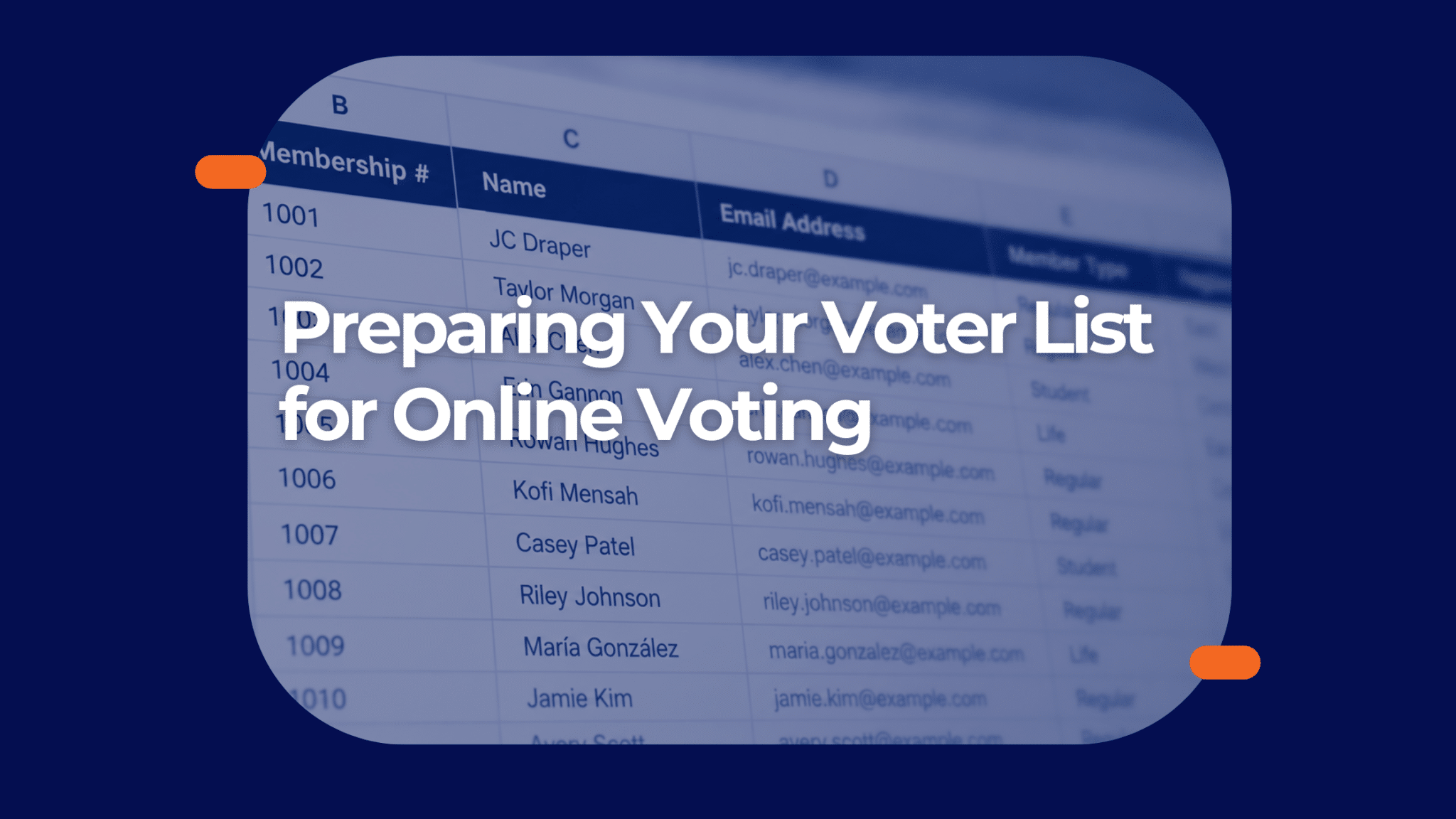
In many cases, an election becomes an unexpected audit of an organization's membership data. Missing email addresses, outdated member records, duplicate entries, and eligibility discrepancies often surface only when voting begins, creating unnecessary work for organizers and frustration for voters.
Practical tip: Before importing voters into your online voting platform, export your voter list from your internal membership system and review it for duplicate records, missing email addresses, outdated member status information, incorrect membership categories, and other eligibility-related data.
2. Failing to Review Election Rules and Requirements
Before setting up an online election, organizations should take time to review the rules and requirements that govern the voting process.
Whether requirements come from bylaws, policies, legislation, or governing documents, these rules often influence how ballots must be structured, who is eligible to vote, how candidates are nominated, and how results are reported.
This is particularly important when transitioning from paper ballots or other voting methods to online voting, as existing procedures may need to be reviewed and adapted.
Practical tip: Create a simple election checklist that documents voter eligibility requirements, positions being elected, ballot rules, candidate information requirements, and any quorum or approval thresholds before election setup begins.
3. Treating Voter Communications as an Afterthought
Even a well-configured online election can encounter participation challenges if voters do not understand how, when, or where to vote.
Low voter turnout is often assumed to be a technology problem when it is frequently a communication problem.
Providing clear instructions in advance can reduce confusion, improve participation, and minimize questions once voting begins. This is especially important when online voting is being introduced for the first time, or when some voters may be less familiar with technology and online tools.
Practical tip: Consider how election information will be communicated through both your organization's existing channels and your online voting platform. Announcements on websites, newsletters, member portals, or internal communications can help build awareness before voting opens, while voting invitations and reminder notices sent through the online voting platform can help drive participation once voting is underway.
4. Failing to Test and Proof the Election Setup
Whether an organization is conducting online voting for the first time or the fifteenth time, testing remains an important step.
Many election issues are not discovered during setup—they are discovered when someone experiences the election as a voter.
Testing provides an opportunity to verify ballot design, voter authentication processes, candidate information, voting instructions, and voter communications before the election is opened to participants. Ideally, an online voting provider should also offer a built-in proofing process that allows organizers to preview exactly how the ballot will appear and function from a voter's perspective before voting begins.
This voter-facing review can help identify formatting issues, incorrect candidate information, missing candidates, incorrect voting options, or confusing instructions before they impact voters.
Practical tip: Determine what level of testing is appropriate for your election. Some organizations may simply review and proof the ballot, while others may prefer to conduct a complete dry run. A good online voting platform should provide multiple ways to test and validate the election before voting begins.
5. Assuming Help Will Be Available When You Need It
Organizer support is often considered only after a question arises or a problem occurs.
However, organizations should think about support requirements during the planning phase. Election organizers may require guidance before or during the election, particularly when conducting online voting for the first time or managing a complex election.
Practical tip: Before selecting a provider, ask how organizers can obtain help during an active election. Look beyond documentation and email support to understand whether direct phone support and emergency assistance are available when time-sensitive questions arise.
6. Choosing a Provider Based Solely on Price
Cost is an important consideration when evaluating online voting providers, but it should not be the only factor.
Organizations sometimes spend more time comparing prices than comparing the factors that will actually influence the success of the election.
Differences in security practices, election experience, support resources, and service offerings can have a significant impact on the election experience. At the same time, a higher price does not automatically guarantee a better platform or better service.
Practical tip: Compare providers against a checklist that includes security, support, election capabilities, reporting, service options, and pricing. Focus on overall value and fit for your organization's needs rather than simply selecting the least expensive or most expensive option.
Preparing for Successful Online Voting
Successful online voting starts long before the first ballot is cast.
By maintaining accurate voter information, reviewing election requirements, communicating effectively, testing thoroughly, and selecting the right online voting provider, organizations can create a better experience for both organizers and voters.
Whether an organization is conducting online voting for the first time or building on years of online election experience, a little preparation before voting begins can go a long way toward ensuring a smooth, secure, and successful online voting event.
Planning an upcoming online voting election? Simply Voting has helped thousands of organizations conduct secure online elections. If you'd like to learn more about online voting or discuss your election requirements, contact us today.