How to Test Online Voting Before Voting Opens

Testing an election before online voting begins is one of the simplest ways to identify issues while they are still easy to address. The right amount of testing will vary by organization, but the goal is the same: confirm that the election reflects your rules, that voters will see what you expect them to see, and that the online voting process works the way you intend.

For many organizations, ballot proofing and a careful review are enough. Others may choose to go further with a small dry run that covers both the voter and administrative experience. The appropriate level of testing depends on the organization’s own review practices and requirements.

Start With the Rules of Your Election

Before testing the ballot within the online voting system, make sure you understand your organization’s election rules and requirements and how they need to be reflected in the configuration.

If voters may select only one candidate for a position, the ballot configuration should enforce that limit. If members may elect up to five people to a committee, they should be able to select up to five. If a bylaw question allows voters to approve, oppose, or abstain, those options should appear as intended.

The same principle applies to the features used in a particular election. Write-ins, candidate statements or photos, supporting documents, weighted voting, segmented ballots, or multiple languages may all deserve attention when they apply.

These rules and requirements provide the reference point for the testing that follows.

Decide Who Should Be Involved in Testing

Who participates in testing will vary by organization.

Often, the election administrator handles the review independently. In other cases, a colleague, election committee member, or other internal stakeholder can provide a useful fresh set of eyes.

That second perspective can help spot an inconsistency or simple oversight. An internal reviewer might notice a misspelled candidate name, for example, or that a candidate was inadvertently left off a particular contest.

Simply Voting customers can also contact our support team when they want another experienced set of eyes. Our staff can briefly review the setup with an eye toward how the election has been configured, flagging potential inconsistencies or gotchas and explaining how we understand the election to work. Sometimes hearing that understanding reflected back can help an administrator confirm that the setup matches their intent.

For organizations with their own independent oversight processes, testing may occasionally involve an auditor or another third party as well. This is uncommon, but it can form part of the additional rigor an organization chooses or is required to apply to its election proofing and review.

Proof the Ballot as You Set Up Your Election

Simply Voting’s ballot proofing tool provides a quick way to experience the ballot from a voter’s perspective at any point while the election is being configured. An administrator might proof individual questions as they are completed, review several sections together, or wait until more of the ballot has been built. The proofing tool can fit into whatever setup and review workflow works best for the administrator.

Administrators can cast simulated proof votes, move through the ballot and confirmation screens, and repeat the process as needed.

A proof link can also be shared with colleagues without giving them access to the administrative back end, making it easy to gather feedback during the setup process.

The proofing process can cover the election-specific details and functionality that matter, including candidate names, question wording, instructions, selection limits, write-in functionality, abstention options, supporting documents, and any other ballot rules that apply.

The same ballot proofing tool can be used to review different ballot variations. If different groups of voters will see different ballot content, proof the relevant variations through the tool. If the election is offered in more than one language, each language version can be reviewed there as well.

Focus each review on the configuration that is relevant to the upcoming election. Established account-level elements, such as branding, only warrant another look when they have changed.

Check the Voter Data and Communications

The ballot is only one part of the online voting process.

Review the voter data before finalization and launch. Confirm that the overall voter count makes sense, check key voter information for accuracy, and verify that any groups or segments used to determine what appears on a voter’s ballot have been assigned correctly.

Communications deserve similar attention. Review invitation and reminder messages, election dates, instructions, contact information, and any dynamic information that will be inserted into the message. Previewing the final message before it is sent can help identify issues that may not have been obvious during setup.

For a closer look at this part of the process, our guide to online voting communications covers what organizations may want to communicate before, during, and after an election.

Together, these checks can help prevent avoidable voter data and communication issues once online voting begins.

Consider a Full Election Dry Run

A full dry run is an optional additional step. For many organizations, careful configuration and ballot proofing are enough. Others may want to go beyond reviewing the ballot itself and test the broader voter and administrative experience before finalizing the original draft election.

Simply Voting’s cloning functionality provides a convenient way to do this. Cloning can save administrators time when creating a new election based on a previous one, and it can also be useful for testing. Once the draft election has been configured and proofed and appears ready for a final test, the administrator can clone it and use that copy for a dry run. If the dry run is successful, the original draft can then proceed toward finalization and launch.

Participants can experience the online voting process from both perspectives. As a dummy voter, someone can receive an invitation, log in, cast a ballot, and receive the appropriate confirmation. From the administrative side, the test can include sending communications, monitoring the election, and unlocking and reviewing the resulting tabulation once voting has ended.

The dry run can follow the broader workflow: email invitation → voter login → ballot → confirmation → voting ends → results review

The dry run provides another opportunity to re-check that the functionality used in the election has been configured as intended. If write-ins are enabled, a dummy voter can try one. If abstention is available, someone can test it. If different groups receive different ballot variations, dummy voters from those groups can confirm that the expected content appears.

At the Far End of the Spectrum: Formal Logic and Accuracy Testing

Formal logic and accuracy testing is generally only relevant where an organization’s own governance, procedures, or oversight requirements call for that degree of rigor.

Formal logic and accuracy testing verifies the calculation and tabulation logic of the online voting system against predetermined expected results. The organization develops a voting script that instructs test voters to cast specific combinations of votes across candidates, questions, ballot variations, abstentions, write-ins, or other applicable scenarios. After the test election closes, the resulting tabulation is compared with the expected results.

Following the voting script accurately is important. If the tabulation differs from the expected results, first confirm that the scripted votes were cast as instructed before investigating the discrepancy further.

Depending on the organization’s requirements, the process may also include documented review, sign-off, or participation by an independent auditor or other third party.

Prepare Your Online Election for Launch

There is no single testing process that every organization using an online voting system needs to follow. For many, careful ballot proofing provides the review they need. Others may choose to add a full election dry run. Organizations with specific governance or oversight requirements may have more formal procedures to follow.

Testing is one part of preparing an election for a smooth launch. Our guide to common mistakes organizations make before online voting begins covers some of the other issues worth considering before voting opens.

A careful review gives administrators a final opportunity to spot issues, verify the experience they have created, and make adjustments before online voting begins. A little preparation beforehand can go a long way toward an election that runs without a hitch.

Planning an Upcoming Online Election? Simply Voting gives election administrators tools to proof and test their online voting setup before voting begins, along with real human support when another experienced set of eyes would be useful. And if something unexpected does come up once voting is underway, emergency support is available 24/7. Whether you plan to administer your online voting system independently or would like additional assistance from our Elections team, contact us today to discuss your upcoming election.

Case Study: Online Voting for Professional Associations | NOBLE

Online voting for professional associations can support many different voting needs throughout the year, from leadership elections and bylaw changes to chapter decisions and other member votes. In 2020, as the National Organization of Black Law Enforcement Executives (NOBLE) prepared for a virtual annual conference during the COVID-19 pandemic, the organization began using Simply Voting to conduct online voting for its members.

NOBLE is a national membership organization with more than 4,800 members and 58 chapters across six regions, focused on public safety and equity in the administration of justice. Since then, NOBLE has conducted 48 elections through the online voting platform, with electorates ranging from small groups to approximately 3,300 members. Its use spans national, regional, and chapter voting, including officer and board elections, representative elections, runoffs, bylaw and constitutional votes, and chapter recognition programs.

Requirements & Challenges

NOBLE needed an online voting system flexible enough to accommodate recurring elections and member decisions with varying electorates, ballot configurations, and governance requirements.

NOBLE also needed flexibility in how its elections were administered. Early on, it opted for Simply Voting’s Fully Managed professional services before later transitioning to self-service administration.

Key requirements included:

  • An online voting system NOBLE could use on a self-service basis for recurring national, regional, and chapter elections.
  • Flexible ballots for candidate elections with write-in functionality, as well as other configurable ballot formats for bylaw and constitutional proposals and member decisions.
  • Support for both small voting groups and organization-wide elections involving thousands of members.
  • Familiar voter authentication and a branded online voting experience for members.

Simply Voting’s Online Voting System

  • Self-Service Election Management: After having a couple of its early elections fully managed through Simply Voting’s Professional Services, NOBLE transitioned to using the online voting system on a self-service basis, with elections administered through its national office. For recurring votes, NOBLE clones and adapts previous elections, reducing the setup required for each new vote.
  • Different Types of Elections and Member Votes: NOBLE uses Simply Voting for national officer and board elections, regional and chapter elections, member-representative elections, runoffs, bylaw and constitutional votes, and chapter recognition programs. Officer elections can include nominated candidates alongside write-in options. For bylaw and constitutional votes, supporting documents are linked from individual proposals so members can review the proposed changes before voting to approve, disapprove, or abstain.
  • Familiar Member Experience: NOBLE uses existing Membership IDs for voter authentication. Its voting website within the Simply Voting online voting system incorporates NOBLE branding, providing members with a recognizable voting environment. Eligible voters receive email invitations and reminders with instructions on how to access online voting.

The Results

What began with online voting during NOBLE’s virtual conference in 2020 has become a recurring part of its governance and member voting. NOBLE has now conducted 48 elections through Simply Voting.

Participation has also increased in NOBLE’s comparable recurring National Officer, Board and Bylaws election. Turnout grew from 34.4% in 2020 to 43.6% in 2026, an increase of 9.2 percentage points.

Looking for an online voting system for your professional association? Simply Voting helps professional associations manage recurring elections and member decisions of many kinds, from officer and board elections to bylaw votes, chapter elections, runoffs, and other governance needs. Whether your organization wants to administer elections using the online voting system on a self-service basis or receive assistance through Simply Voting’s professional services, contact us today to discuss your upcoming election.

How to Evaluate the Security of an Online Voting System Provider

Choosing an online voting system provider is a consequential decision. In most cases, that responsibility will fall to one person or a small group balancing election planning with many other responsibilities. They may know security is important, but it is not always obvious how to evaluate the security practices behind an online voting provider’s claims.

You can make better decisions by looking for credible proxies and asking a small number of revealing questions. These signals can tell you a great deal about how seriously an online voting provider approaches security and how much evidence sits behind its claims.

Security is only one part of choosing an online voting system provider. We have a separate guide to choosing an online voting provider that looks at the broader decision, including election requirements, administration, support, and reporting. Here, we are going deeper on security.

Look for Independent Security Assurance

If you do only one thing to evaluate an online voting provider’s security, start by looking for credible independent security assurance.

You aren’t in a position to evaluate every part of an online voting provider’s security program yourself, and that is okay. Independent third-party scrutiny gives you another source of evidence. A security-conscious online voting provider should already be engaging qualified third parties to examine important parts of its practices and technology. As a buyer, you can use that work instead of relying only on the company’s own claims.

Independent security reviews can take different forms. Specialized auditors may examine whether a company has appropriate security controls and processes in place, such as how access is managed, risks are assessed, incidents are handled, or business continuity is planned. Other security specialists focus more directly on the technology, such as examining source code for potential weaknesses or actively testing a system to see whether vulnerabilities can be found and exploited.

These reviews answer different questions, so it is useful to understand what was actually examined. The organization behind the review matters too. Look for an established auditor or security firm with a meaningful track record, ideally one that regularly performs similar work for other established organizations.

A-LIGN SOC 2Simply Voting recently completed its 2026 SOC 2 examination with A-LIGN, an established cybersecurity compliance firm that reports having completed more than 36,000 audits for more than 6,400 clients globally. Simply Voting’s examination covered controls relevant to Security, Availability, and Confidentiality for its Online Voting and Internet Elections Services System.

Look at How the Online Voting Provider Approaches Security

Much of what you initially learn about an online voting provider will come from its website, proposals, and conversations with its team. Independent assurance is valuable because it can corroborate parts of that story rather than leaving every security claim self-reported.

It is also useful to understand who within the online voting provider is responsible for security and what resources support that work. Does the company maintain an in-house technical team that understands, maintains, and secures the platform, or are core technical responsibilities primarily outsourced? Outside specialists can provide valuable expertise, particularly for independent testing and other specialized security work, but the online voting provider itself should have clear ownership of its security and the technical capability to respond when something needs attention.

A mature security program involves much more than the technology itself. Staff security training, access management, risk assessment, vendor oversight, monitoring, vulnerability management, incident planning, and business continuity can all play a role.

A SOC 2 report can be particularly valuable here because it provides independent insight into many of these underlying practices. Simply Voting’s 2026 report, for example, covers controls across risk assessment, staff security training, access management, vendor oversight, monitoring, vulnerability management, business continuity, and other areas.

Price and company size are poor substitutes for evidence of how security is actually managed. A more useful baseline is understanding who owns security, what people and processes support that work, and what independent evidence supports the company’s description of its security program.

Security Starts Before Problems Are Found

Look for depth and multiple layers of prevention, review, and testing. No single test or security practice can identify every possible weakness. Using different approaches gives an online voting provider more opportunities to prevent problems and find those that do occur.

It starts with how the software itself is developed and maintained. Changes to an online voting system should be reviewed and tested before they reach customers, and the software and supporting systems need to be maintained as technology and security threats evolve.

Simply Voting follows a documented software development life cycle (SDLC) in which software changes are peer reviewed and tested before they reach production, with those change-management controls included in its 2026 SOC 2 examination.

Security testing can then examine the system from different perspectives.

Source-code scanning looks within the software itself for programming patterns or mistakes that could create security weaknesses. You can think of it as examining the application from the inside.

Vulnerability scanning checks the systems and software being used for known security weaknesses. Because new vulnerabilities are continually discovered in widely used technologies, this type of scanning can be performed frequently.

Independent penetration testing approaches security from another direction. Security specialists actively test the system and attempt to find and exploit weaknesses much as an attacker might. This can uncover issues that may not be apparent through development processes or automated scanning alone.

Simply Voting also conducts annual independent penetration testing, daily vulnerability scanning, and regular source-code scanning.

A vigilant security program also welcomes legitimate opportunities to find issues that those layers of testing may have missed. Outside security researchers can provide another valuable source of scrutiny, and a vulnerability disclosure program gives them a clear way to report a potential weakness so it can be investigated and addressed. Simply Voting maintains a formal vulnerability disclosure program because ongoing vigilance is important.

Ask how the online voting provider works to prevent security weaknesses, what different methods it uses to find them, and what happens when one is identified.

Understand How Voter and Election Data Is Handled

Look for a clear explanation of how customer information is handled from beginning to end. An online voting provider should be able to explain that lifecycle in terms you can understand.

An online election will require voter personally identifiable information (PII), participation data, election results, and other customer information. Where is it stored? Who can access it? How is access controlled? How is information protected while it is transmitted and stored? How long is it retained? What happens when it is no longer needed?

Election-specific protections matter as well. Voter authentication needs to support the requirements of the election, while ballot secrecy and confidentiality need to be maintained where required. Administrative access should also be controlled so that only authorized people can manage sensitive election information or settings.

It is also reasonable to ask which other companies are involved in storing, processing, backing up, or transmitting your information. An online voting provider may rely on hosting companies, backup services, communications providers, or other vendors. Part of managing security is knowing those dependencies, limiting access appropriately, and assessing the risks that come with them.

At minimum, you should be able to get clear answers about what customer information the online voting provider holds, who can access it, how it is protected, where else it may go, how long it is retained, and what happens when it is no longer required.

Security Includes Reliability and Availability

Look at how the online voting provider tests capacity, builds in resilience, and prepares for failures. Voters need to be able to cast their ballots, and customer administrators need to be able to access and manage their elections when the system is needed.

Online voting platforms support hundreds of elections at the same time. Load testing needs to consider demand across the platform as a whole, not just any one election.

Load testing places very heavy simulated demand on the platform to see how the online voting system performs under pressure and to help determine how much capacity should be available. Simply Voting regularly performs load testing to make sure the platform has far more capacity than it would normally require across all active customers, leaving ample room for spikes in usage.

Reliability also depends on the infrastructure underneath the application and what happens when something fails. Simply Voting uses established infrastructure providers, including Hut 8 for production hosting and AWS for offsite backups. This is supported by Simply Voting’s own monitoring, redundancy, backup practices, and tested business continuity and disaster recovery planning.

A useful check is how the online voting provider tests overall system capacity, what resilience exists in its underlying infrastructure, and how regularly its continuity and recovery plans are tested.

5 Security Questions to Ask an Online Voting System Provider

A detailed technical security review is not realistic for every organization, but a small number of practical questions can still reveal a great deal about the security practices behind an online voting system:

  1. What independent security audits or assessments do you undergo, who performs them, and what do they cover?
  2. Who is responsible for security, and what technical team and resources support that work?
  3. What ongoing practices do you use to prevent, identify, and address security weaknesses?
  4. How is customer, voter, and election data protected, who can access it, where else may it go, and how long is it retained?
  5. How do you test the online voting system for heavy demand, prepare for failures, and verify that the service can remain available or recover as planned?

Any online voting provider worth your business should be able to answer these questions and back up its claims with evidence.

Making a More Informed Security Decision

There is no single audit, test, feature, or policy that tells you everything you need to know about the security of an online voting system provider. A sound evaluation comes from asking good questions, looking for credible evidence, and understanding what sits behind the word “secure.”

Simply Voting’s broader security approach includes its 2026 SOC 2 examination, staff security training, a documented software development life cycle, annual independent penetration testing, ongoing vulnerability testing, a vulnerability disclosure program, load testing, and tested business continuity and disaster recovery planning.

Evaluating an Online Voting System Provider? Simply Voting has been helping organizations run secure online elections since 2003, supported by an ongoing program of independent review, security testing, load testing, and continuity planning. Contact us today to discuss your upcoming election and the security requirements that matter to your organization.

Online Voting for Professional Associations: A Process That Fits Your Governance

Professional associations rely on member participation to select leaders and make certain governance decisions. However, the election itself is often managed by one person or a small team balancing election administration with membership, communications, and other responsibilities.

Some association elections are relatively straightforward, such as an annual vote for a handful of leadership positions. Others involve multiple positions, different voter groups, or member votes on bylaws, dues, and other governance matters.

An online voting tool needs to reflect those rules without making the election unnecessarily difficult to administer. Eligible members should have a clear voting experience, and the association should be able to confidently stand behind the result.

Different Approaches to Leadership Selection

Leadership selection begins before the ballot opens. The process may include candidate recruitment, nominations, eligibility review, and preparation of candidate information before members are asked to vote.

The way associations select their leaders can also vary considerably, and some of those approaches are evolving. ASAE, the American Society of Association Executives, has highlighted a growing emphasis in some organizations on board competencies rather than strictly geographic or constituency-based representation. It has also identified interest in smaller, more diverse boards and, in some cases, the use of a single slate rather than a traditional contested election.

In practice, that can lead to very different online voting processes. Members might choose between candidates for a single position, select several people from a larger field, approve a proposed slate, or elect a representative for a particular group or region.

Voting Rights and Eligibility Can Vary

Professional associations may have membership categories with different voting rights. Eligibility may depend on membership type, good standing, professional designation, or other requirements established in the association’s governing documents.

Before online voting opens, administrators need to translate those rules into an accurate voter list. That can mean confirming membership status, identifying the appropriate voter groups, removing ineligible records, and making sure the contact information being used for the election is current.

Some associations also have additional layers that affect voting eligibility or ballot access. Chapters, regions, professional sections, or specialty groups may have their own elected positions or voting rights. An organization might elect national leaders alongside regional representatives, conduct separate section elections, or have members who are eligible for several related voting events.

International associations may have further considerations, including multiple languages, geographically distributed members, and online voting periods that need to accommodate several time zones.

For an association with straightforward requirements, an online voting tool may only need one accurate voter list and one organization-wide ballot. When voting rights vary by membership category, region, section, or another rule, administrators may need more precise control over which voters receive access to particular positions or questions.

Eligibility is only one part of the association’s voting rules. Governing documents may also establish quorum requirements, approval thresholds, the number of candidates a member may select, or other conditions that affect how a particular election or member decision is conducted.

Together, these rules shape the online voting process, determining who can participate, what appears on each member’s ballot, and what is required for the result to count.

Election Administration Is Usually One Responsibility Among Many

The person responsible for an association election may use the online voting tool for a few weeks and then not return to it until the organization’s next voting cycle. Election administration is also likely to be only one part of a broader role that includes membership, communications, and other association responsibilities.

This reflects a broader reality of association management. CSAE, the Canadian Society of Association Executives, recognizes that internal capacity can vary widely between organizations, from associations with dedicated staff or departments to those where one individual may be the only staff resource.

This makes usability particularly important. An association’s election requirements may still be sophisticated, with different voter groups, ballot rules, or communication needs, but administering them should not require the person responsible for the vote to become a technical specialist.

Some associations will be comfortable administering their elections themselves. Others may prefer additional support or independent election management. The appropriate approach depends on the organization’s internal resources, governance requirements, and the role it wants an outside provider to play.

For a closer look at those different approaches, see our guide about who should run your online election.

A Familiar Process for Recurring Elections

Leadership elections commonly follow an established cycle as directors, officers, or other elected representatives complete their terms. Although candidates, dates, and voter information change, much of the underlying election structure may remain familiar.

That familiarity can be useful for the person administering the election. Processes, ballot structures, and lessons from a previous voting cycle can provide a starting point rather than requiring everything to be reconsidered from the beginning each year.

Associations can also learn from one election to the next. Questions from members, communication issues, or parts of the process that required extra attention can inform the next voting cycle.

Not every leadership change follows the expected schedule, however. A resignation or other vacancy may require a replacement process or special election to fill the position. In those situations, the association may be working from a familiar election framework while adjusting the timeline, position, voter group, or other details for the circumstances.

The Member Voting Experience

The way members experience an election can shape their confidence in the process. A clear, well-organized ballot helps voters understand the decision before them, know how to participate, and feel confident in exercising their voice on association matters. For members, online voting can make participation simple and immediate.

Professional association ballots may therefore need to provide more context than a list of names or a simple yes-or-no question. Candidate elections can include biographies, professional qualifications, statements, photographs, and information about the position being filled. Governance votes may instead require proposed wording, background information, supporting documents, or an explanation of what would change if the proposal is approved.

The surrounding voting experience matters as well. Members need to know when voting opens and closes, how to access the ballot, and where to get assistance if they encounter a problem. This can be particularly important when an association is introducing online voting for the first time.

For more on planning invitations, reminders, and other voter messages, see our guide to online voting communications before, during, and after an election.

Member Voting Goes Beyond Candidate Elections

Selecting directors, officers, or other representatives is a common reason professional associations conduct a vote, but leadership elections are not the only decisions that may be placed before members.

Members may also vote on bylaw or constitutional amendments, member resolutions, governance changes, dues or fee proposals, and other matters requiring formal approval. ASAE has noted that member voting rights can extend beyond leadership elections to significant organizational decisions. It has also highlighted bylaw votes as an opportunity to help members better understand how their association is governed and why proposed changes matter.

These decisions give members a direct role in matters that can shape the organization beyond who serves in its leadership positions. Online voting provides a straightforward way for members to exercise those formal voting rights, whether they are choosing association leaders or having a voice on a governance question placed before the membership.

What Should a Professional Association Look for in an Online Voting Tool?

Ultimately, a professional association needs to confidently stand behind both the election process and the final result. That requires more than simply collecting ballots online.

When evaluating an online voting tool, key considerations include:

  • The association’s governance and voting rules. The system should accommodate the leadership selection methods, ballot formats, approval thresholds, and other requirements established by the association.
  • Accurate voter eligibility and authentication. Administrators need to control who can vote and, when necessary, which positions or questions particular members can access.
  • Ballot secrecy, privacy, and security. The system should protect member voting information and maintain the appropriate separation between voter participation and ballot choices.
  • A clear and accessible member experience. Members should be able to understand and access the ballot across common devices, with candidate or proposal information and language options where required.
  • Manageable administration. The system should provide the required flexibility without demanding unnecessary technical expertise from someone who may administer elections only periodically.
  • Auditable and verifiable results. The election and its outcome should be able to stand up to scrutiny if members, candidates, or election officials raise questions after voting closes.
  • Knowledgeable election support. When assistance is needed, administrators should be able to reach people who understand both the voting system and the practical issues that arise when running an election. The amount of support required may vary from occasional technical guidance to more hands-on election administration.

A strong fit makes the election practical to administer, clear for members, and credible when the outcome is reviewed.

Online Voting That Fits the Association

Professional associations vary widely in size, membership, governance structure, and internal resources. Their elections vary with them.

A practical approach to online voting accounts for both the association’s governance requirements and the realities of administering the election. A straightforward election should remain straightforward, while more involved governance requirements may call for additional flexibility.

Simply Voting is designed around that balance. Whether your association is electing its leadership, filling a vacancy, selecting representatives, or asking members to decide a formal governance question, the voting process should fit your organization.

Planning an Upcoming Association Election? Simply Voting offers online voting for professional associations, with both a self-service approach and assistance from our experienced Election Services team for leadership elections, bylaw votes, and other formal member decisions. Contact us today to discuss how Simply Voting can be your online voting partner.

New Feature: Edit Scheduled Voter Email Blasts

We’ve added a new feature to our online voting system: scheduled voter email blasts can now be edited before they are sent.

Voter email blasts are messages sent from the Election Manager to eligible voters, such as election invitations, voting reminders, or other election-related communications.

Election administrators can now update the email body or adjust the scheduled sending date and time without cancelling the original message and creating a replacement. This makes it easier to correct last-minute details, clarify voting instructions, refine the wording of a reminder, or change when a message will be delivered.

How Does It Work?

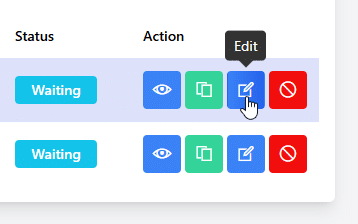
Navigate to the Email Blast section of your Election Manager. Find the scheduled email you want to update. Click the Edit icon in the Action column beside the email.

    Update the email body, scheduled date, or send time. Save your changes when you are finished.

    Once saved, the revised version will automatically replace the original scheduled message.

    Which Email Blasts Can Be Edited?

    Only voter email blasts scheduled for a future date and time that have not yet been sent can be edited.

    Messages that have already been sent cannot be changed.

    More Flexibility for Election Communications

    Election timelines and communication needs can change. You may need to correct a detail, update other important information, revise the wording of a reminder, or adjust when a message will be sent to voters.

    This update makes managing voter communications easier by allowing you to revise an existing scheduled message directly within the online voting tool in just a few clicks.

    For broader guidance on planning invitations, reminders, and other election messages, read our guide to online voting communications before, during, and after an election.

    Log in to your Election Manager to review or update your scheduled voter email blasts, or read our updated Help article on Managing Email Blasts.

    Online Voting Communications: What to Send Before, During, and After an Election

    Effective online voting communication follows a simple sequence: let voters know the election is coming, send clear voting instructions when online voting opens, use reminders thoughtfully throughout the online election period, and share results or next steps after voting closes.

    For many organizations, the sequence can and probably should be that straightforward.

    The key is to use the available communication channels deliberately. The organization’s existing channels can provide context and familiarity, while the online voting system can handle personalized voting information and communications tied directly to the election.

    Election Communication Is Part of Election Administration

    Election communications are sometimes treated mainly as a way to increase voter turnout. Participation matters, but communication also supports the fair and orderly administration of an online election.

    Voters need to know that an election is taking place, what they are being asked to decide, and how to cast their online ballots. They may also need information about candidates, proposed amendments or other matters being decided, voting rules, deadlines, and when results will be available.

    Even a simple communication sequence benefits from being mapped to the election timeline so that notices, voting instructions, reminders, and results communications are sent at the appropriate stages.

    For many organizations, one election administrator can be responsible for coordinating the communications, responding to voter questions, and addressing communication or access issues as they arise. That simple approach is perfectly workable.

    Organizations with more complex communication needs may require coordination among membership, technical, and communications teams. Shared templates, multiple languages, and clearly assigned responsibilities can help ensure that voters receive consistent information. Organizations should also review any notice requirements established by their bylaws, policies, collective agreements, governing documents, or applicable legislation.

    Keep Election Communications Neutral

    Official election communications should remain neutral in tone and content. They can encourage participation, explain the process, and communicate deadlines or updates without favoring a candidate, position, or outcome.

    Neutrality also matters when circumstances change. If a candidate withdraws or information needs to be updated while online voting is underway, the organization should consider how to communicate the change consistently to voters and candidates. A reliable online voting provider can also serve as an experienced partner when unexpected circumstances arise, helping the organization assess the issue, determine any necessary changes to the ballot or election process, and communicate those changes without unnecessarily disrupting the election.

    Before Online Voting Opens

    Some organizations follow a regular election cycle. Long-standing members may already know when nominations open, when voting normally takes place, and what positions are usually on the ballot, while newer members may be less familiar with the process. A familiar election season can make planning easier, but it does not replace clear notice and instructions for each election.

    Other votes arise outside the normal cycle. An organization may need to hold a special election to fill a vacancy, conduct a run-off, vote on a collective agreement or strike mandate, or address an issue that emerged unexpectedly. These votes may require a shorter communication timeline and more explanation because voters were not already expecting them.

    Pre-election notices may come through the organization’s established channels, the online voting system, or both. Familiar organizational channels such as membership emails, newsletters, the organization’s website or portal, and official social media accounts can introduce the election and explain what voters should expect. Depending on the organization’s setup, the online voting system may also send advance notices or begin communicating when online voting opens. What matters is that voters receive consistent information and know how the official ballot invitation will arrive.

    The organization can also use its existing channels to help voters recognize the official ballot invitation. It may identify the expected sender and explain how voting credentials will arrive, especially when the invitation comes from the online voting system rather than the organization’s usual email address.

    When Online Voting Opens

    When online voting begins, the online voting system can send personalized voting credentials, instructions for accessing the ballot, and the official closing deadline.

    The opening message benefits from being concise and transactional. A clear subject line should identify the election and signal the action required, using direct language such as “Voting Is Open” or “Vote Now.” The body should reinforce that call to action and provide the information needed to vote, including how to access the online ballot and when voting closes. Simple formatting can improve readability and help the invitation appear as an official election communication rather than a promotional email.

    The organization may again reinforce the opening through its website, member portal, newsletter, or social media. The online voting system provides the personalized voting information, while the organization’s channels can add familiarity and broader awareness. The applicable time zone should be clear whenever voters may be participating from different regions.

    Dates, deadlines, and voting instructions should remain consistent across every channel.

    Plan Reminders During Online Voting

    Once online voting begins, communications usually shift from preparation to participation. An online voting system allows administrators to track whether eligible voters have participated without revealing how anyone voted. Reminders can then be limited to eligible voters who have not yet cast their ballots.

    The reminder schedule should reflect the length of the voting period and the circumstances of the election. A short election may need only one well-timed reminder, while a vote open for several weeks may justify a sequence of a few reminders. The goal is not to send as many messages as possible, but to maintain awareness without overwhelming voters.

    Each reminder should have a clear purpose. An early reminder might repeat the basic voting instructions, while a later one emphasizes the approaching deadline. Messages should remain concise, recognizable, and relevant to voters who have not yet participated.

    Overusing reminders can do more harm than good. Voters may ignore later messages, unsubscribe from voting-related communications, or mark election notices as spam. Repeated complaints can also affect future deliverability, including notices for later elections. Organizations that hold regular votes should be especially careful not to exhaust the attention and trust of their voters.

    Use the Ballot as a Communication Tool

    The online voting system is not only a channel for invitations and reminders. The online ballot itself can also communicate important information at the point where it is most useful. This allows the organization to provide concise instructions and context directly where voters are making their selections.

    A short introduction may explain the purpose of the election or provide general voting instructions. Individual ballot sections can introduce related contests or questions, while position descriptions, candidate statements, proposed amendments, and reference materials can appear alongside the relevant items.

    This information should complement, rather than replace, other communications.

    Plan the Final Reminder

    Reminders throughout the voting period should clearly state when online voting closes and how voters can access their ballot. The final reminder reinforces that information with greater urgency while remaining concise and action-oriented. It should include the exact closing date and time, the applicable time zone, and a direct path to the online ballot.

    The subject line should make the approaching deadline unmistakable. Depending on the timing, it might combine the election title with language such as “Voting Ends Tomorrow” or “Voting Ends Today.”

    Timing matters. A reminder sent the day before voting closes can give voters time to act, while an early message on the final day may reach them before their day becomes busy. The right timing will depend on the length of the election and when voters are most likely to see and act on the reminder, but it should leave them a reasonable opportunity to vote before the online election closes.

    After Online Voting Closes

    After online voting closes, organizations have another opportunity to communicate with voters. Depending on the election rules and process, they may share results, explain next steps, or advise when further information will be available.

    Organizations communicate results in different ways. Some publish results directly through the online voting system, while others use their own website, member portal, meeting, email, newsletter, or social media. Some use both the online voting system and their organizational channels. The method should reflect the organization’s rules, the sensitivity of the election, and the audience that needs to receive the information.

    Organizations may also invite feedback about the voting experience, especially after a new process or first online election. Some online voting systems allow voters to leave a free-form comment that remains separate from both the voter’s identity and ballot selections. This can provide useful feedback about access, instructions, accessibility, or the overall experience without compromising anonymity.

    After the election, administrators can review voter questions, email deliverability issues, participation patterns, and anonymous feedback to identify what should be clarified, timed differently, or communicated through another channel next time.

    Build Communication Into the Election Plan

    Election communication does not need to be complicated. For many organizations, a simple sequence of advance notice, a clear opening message, thoughtfully timed reminders, and a result announcement will be enough.

    Established organizational channels can provide context, familiarity, and broad awareness, while the online voting system handles personalized access, reminders to non-voters, and communications tied directly to the election.

    Whether the election follows a familiar schedule or arises unexpectedly, the goal remains straightforward: give voters clear information, avoid unnecessary messages, and make each stage of the process easy to understand.

    The strongest communication uses each channel deliberately and gives voters the information they need when they need it.

    Planning an upcoming online election? Simply Voting has helped thousands of organizations conduct secure online elections while supporting voter communications before, during, and after voting. Whether your organization prefers a self-service approach or would like assistance from our experienced election services team, contact us today to discuss your upcoming election.

    Should You Use an Online Voting System or Survey Software?

    Online voting systems and survey platforms can look similar. Both present questions, collect selections, and produce results. For a simple yes-or-no question, the experience may even appear nearly identical.

    Survey software is well suited to gathering feedback, conducting research, and analyzing responses. When an organization is conducting an official election, it should use an online voting system designed specifically for elections.

    An online voting system can support many straightforward surveys, consultations, and advisory polls. Survey software should not be used to conduct an official election.

    Surveys and Elections Serve Different Purposes

    Organizations across many sectors use surveys to better understand the people they serve. A union might ask members about bargaining priorities or workplace concerns. A professional association could gather feedback on continuing education or member services. A university might survey students about campus programs, while a club could ask members about activities or facilities. A cooperative may consult members about future initiatives, and a corporation might collect employee feedback or non-binding input from shareholders.

    In each case, the responses help inform the organization. They do not ordinarily determine the formal outcome themselves. Survey software is often ideal for this work because it may support long questionnaires, extensive branching based on previous answers, open-ended responses, saved progress, scoring, and detailed analysis.

    Elections and formal votes have a different purpose. Their results may determine who holds office, whether a collective agreement is ratified, whether bylaws are amended, or whether a resolution passes. A union may elect officers, a professional association may choose its board, a university may conduct student or faculty elections, and a cooperative or club may ask members to decide a governance question. The process must produce a result that participants and the organization can accept as legitimate.

    Survey Features Can Resemble Election Features

    Modern survey platforms may distribute personalized links, restrict submissions, close at a specified time, anonymize responses, send reminders, and export results. A capable administrator could configure a survey tool to reproduce parts of a simple election, particularly when the ballot and voting rules are straightforward.

    The organization would still be responsible for determining whether that configuration adequately protects voter eligibility, ballot secrecy, duplicate-vote prevention, tabulation, and the records needed if the result is questioned. Using survey software means designing that process internally: selecting the appropriate settings, identifying gaps, introducing manual controls where necessary, and confirming that the combined arrangement satisfies the election rules.

    Using an online voting system designed specifically for elections transfers much of that process design from an improvised configuration to software built and tested for election administration.

    Managing Eligibility, Ballots, and Secrecy

    An election often requires a precise relationship between each voter and the ballot they are entitled to receive. A union member may vote only within a particular bargaining unit, a student may receive contests for one faculty or campus, different membership classes may vote on different questions, and shareholders may hold different voting weights.

    Survey branching can display different questions based on answers entered by a respondent. Ballot entitlement is different because it should be based on eligibility established before the voter begins voting, not on information entered into the form.

    Secret-ballot elections create an additional challenge. The organization may need to know who is eligible, who has already participated, and who has not yet voted, while administrators remain unable to connect an individual voter with their selections. Some survey platforms can authenticate respondents, and some can collect anonymous responses. An online voting system is designed to combine established voter eligibility, the correct ballot entitlement, single participation, and ballot secrecy within one election process.

    A Ballot Is More Than a Questionnaire

    An online voting system anticipates that organizations may need to display candidate photographs, biographies, personal statements, qualifications, proposed bylaw language, supporting documents, and detailed voting instructions. Its interface can organize that material around the decisions voters are being asked to make, rather than treating every item as another question in a general-purpose form.

    How this information appears also matters. An election ballot is designed to help voters make, review, and formally cast selections under established rules. It may enforce the maximum number of candidates a voter can select, support abstentions, present different contests to different voter groups, and provide a clear review stage before submission.

    The same principle applies to voting methods. An election may involve ranked choices, multiple selections, weighted voting, or different rules across several contests. Survey software may collect those selections, but the administrator may need to export and tabulate them separately. An online voting system keeps the ballot rules, voter experience, and calculation of the result within the same process.

    Security Designed for Elections

    Election security must account for the organization conducting the election, the candidates or options appearing on the ballot, and the voters whose participation gives the result legitimacy. Candidates need confidence that the rules are applied consistently, voters need confidence that their ballots remain secret and are counted correctly, and the organization needs confidence that it can adopt and stand behind the result.

    Survey software is not necessarily less secure than an online voting system. Established survey platforms may have strong infrastructure, encryption, access controls, and mature security programs. However, those controls support products used for many forms of research and data collection. An online voting system must also address election-specific risks such as ballot eligibility, duplicate participation, the separation of voter identity from ballot selections, accurate tabulation, system availability during a fixed voting period, and confidence in the final result.

    Organizations should consider whether election integrity shapes the company’s mission, values, product decisions, testing, documentation, and operating practices. That commitment becomes especially important when the easiest technical response to a problem could create unequal treatment, inconsistent ballots, or doubts about the election afterward. The system and the people supporting it should protect the integrity of the process, not merely carry out whatever change is technically possible.

    Support That Understands Elections

    Experience becomes valuable when an organization translates its rules into an actual ballot. Different voter groups may require different contests, a candidate may withdraw, or bylaws may specify a voting method, threshold, or publication process. An online voting provider that has supported a large volume of elections across different industries is more likely to recognize these issues and provide guidance grounded in real election administration.

    Survey platforms support customer feedback, registrations, market research, academic studies, employee questionnaires, and many other projects. The team supporting an online voting system has a narrower focus and already understands voter eligibility, ballot secrecy, candidate changes, voting thresholds, weighted voting, tabulation, and result publication. Survey support helps configure a tool; election support helps administer an election, with a practical understanding of the terminology, requirements, and consequences involved.

    That specialization matters most while voting is underway. Elections operate within fixed timelines, and urgent issues cannot always wait until the next business day. Emergency election support should address both the technical problem and its effect on voters, candidates, ballot consistency, and the defensibility of the result. Some online voting systems also offer professional election services for organizations that want experienced specialists to configure, manage, monitor, and support the election on their behalf.

    Reporting That Supports the Result

    An online voting system must provide more than a summary of responses. The organization may need participation reports, automatically tabulated totals, certified result reports, voting receipts, verification tools, and audit logs showing important administrative and election activity. These records help the organization review, certify, communicate, or publish the result while preserving ballot secrecy.

    Survey exports and analytical dashboards are valuable when the goal is to understand response data. Election reporting is organized around a different need: demonstrating that the election was administered consistently and that the published outcome corresponds to the ballots cast. Detailed audit logs can also support neutral administration by creating a record of significant actions without exposing how individual voters voted.

    Where Survey Software Excels

    An online voting system is not automatically the best tool for every survey. Dedicated survey platforms may be better suited to lengthy research questionnaires, detailed skip logic, extensive written responses, saved progress over multiple sessions, scoring, cross-tabulation, and advanced analysis.

    Those capabilities are valuable when an organization wants to study attitudes, experiences, or behaviours in depth. An online voting system can support many straightforward surveys, consultations, and advisory questions, but it may not provide the same depth of research functionality as specialized survey software.

    Choose the Tool That Matches the Decision

    A survey platform may be technically capable of recording every selection in a simple vote. That does not mean it provides the strongest process for determining who may vote, protecting ballot secrecy, applying election rules, calculating the result, and supporting confidence in the outcome.

    Survey software may offer greater flexibility for long questionnaires, complex branching, and detailed analysis. An online voting system offers a different kind of flexibility: it can support straightforward surveys, consultations, advisory polls, and formal elections where eligibility, secrecy, tabulation, specialist support, and confidence in the result all matter.

    An online voting system can support many types of organizational decision-making. Survey software can be an excellent tool for understanding what people think, but it should not be stretched into a role it was not designed to perform when the organization needs an official election result.

    Planning an upcoming election? Simply Voting has helped thousands of organizations conduct secure online elections across unions, professional associations, universities, cooperatives, corporations, clubs, and many other sectors. Whether your organization prefers a self-service approach or would like assistance from our experienced election services team, contact us today to discuss your upcoming election.

    Helping Voters Make Informed Decisions with an Online Voting System

    An online voting system does more than provide a secure way for voters to cast a ballot. It also serves as an important communication tool, allowing organizations to present the right information at the right time throughout the online voting experience.

    Not every election requires the same amount of information. Some online ballots may only need a title and a list of candidates, while others benefit from candidate information, reference materials, or additional context. The goal is not to provide as much information as possible, but rather the right information at the right time.

    The Ballot Is Part of the Conversation

    Organizations often think about voter communication in terms of election notices, reminder emails, and meeting announcements. Those communications are important, but the online ballot itself is another opportunity to communicate with voters.

    For some elections, a brief introduction at the beginning of the online ballot can orient voters by explaining the purpose of the election, reminding them of important voting instructions, highlighting deadlines, or communicating other key information before voting begins. Other elections may not require an introduction at all.

    The key is recognizing that communication doesn’t end when a voter opens the online ballot. An online voting system should support communication throughout the voting experience, not just before it begins.

    Organize Information Throughout the Ballot

    As voters move through an online ballot, different questions naturally arise. Rather than presenting every piece of information in one place, organizations can organize information so it appears where it’s most helpful.

    For example, an online ballot might include an informational section before executive officer elections, another introducing proposed bylaw amendments, or additional explanatory text before a group of policy questions. Organizing an online ballot into logical sections creates a more intuitive voting experience, allowing voters to focus on the decisions they are making rather than navigating the ballot itself.

    Provide Context for Positions and Questions

    Some positions and ballot questions require very little explanation. Others benefit from additional context or instructions.

    When voters reach a position or ballot question, one of the first questions they may have is, “What exactly am I voting on?” A position description might explain the responsibilities of a board member, committee representative, or officer, the length of the term being filled, or why a vacancy exists. A ballot question could summarize a proposed bylaw amendment, explain why members are being asked to vote, or describe the practical impact of the decision being presented.

    Additional instructions can also explain how a particular contest works. This may include the number of candidates that may be selected, the voting method being used, or organization-specific instructions and terminology that are already familiar to voters.

    Presenting this information alongside the relevant ballot item gives voters the context they need when they need it.

    Help Voters Compare Candidates

    Elections involving candidate races often benefit from providing additional information about each individual appearing on the online ballot.

    Candidate photographs, biographies, statements, or qualifications can all be presented directly within the online ballot itself. An online voting system may also allow organizations to provide links to additional candidate information where appropriate.

    Presenting this information within the online ballot makes it easier for voters to review and compare candidates as they make their decisions. Rather than switching between multiple websites or documents, voters can compare biographies, qualifications, candidate statements, or responses to standard candidate questions without leaving the online voting experience.

    Include Reference Materials When Appropriate

    Some elections require organizations to make additional materials available to voters, while in other cases those materials simply provide helpful background information.

    Rather than trying to fit lengthy documents into an online ballot, organizations can provide links to reference materials where appropriate. These may include proposed bylaws, constitutional amendments, collective agreements, financial statements, meeting packages, nomination materials, or other official documents. An online voting system may host these materials directly or simply provide links to documents already available on the organization’s own website.

    Reference materials can complement the voting experience without becoming part of the ballot itself. This approach keeps the voting experience focused while ensuring additional information is available for voters who want to review it, or for organizations that are required to make these materials available as part of the election process.

    Balance Information with Simplicity

    Not every voter will read every piece of information provided, and that’s okay.

    Some voters simply want to cast their ballot. Others may wish to compare candidate qualifications, review reference materials, or better understand a proposed amendment before making a decision.

    The goal isn’t to maximize the amount of information on an online ballot. It’s to make helpful information available where voters naturally need it, allowing those who want additional context to find it without distracting from the voting process.

    Organizations should think about an online ballot the same way they think about any other important communication with their members: provide the information voters need, where they need it, and only when it adds value.

    Planning an upcoming online election? Simply Voting has helped thousands of organizations conduct secure online elections while providing the flexibility to present candidate information, supporting documents, voting instructions, and other important election information throughout the online voting experience. Whether your organization prefers a self-service approach to online voting or would like assistance from our experienced election services team, contact us today to discuss your upcoming election.

    Case Study: Online Voting for Unions | California Teachers Association

    Online voting for unions has become an increasingly important way for organizations to conduct secure elections. Since 2019, the California Teachers Association (CTA) has used Simply Voting’s online voting system to conduct nearly 150 online elections for one of the largest teachers’ unions in the United States. Representing more than 310,000 educators across California, CTA conducts elections for a diverse membership involving multiple voter groups, tailored ballots, and secure voter authentication.

    From local elections involving just a few hundred eligible voters to CTA’s largest election with more than 277,000 eligible voters, Simply Voting’s online voting system has demonstrated the flexibility to support union elections of every size.

    Committed to strengthening public education through democratic participation, CTA required an online voting system capable of supporting large-scale, secure, and highly configurable union elections.

    Requirements & Challenges:

    CTA needed a secure and scalable online voting system that could efficiently manage complex elections across its diverse membership.

    Key requirements included:

    • Secure online voting for hundreds of thousands of eligible voters.
    • Multiple concurrent elections for different voter groups and elected positions.
    • Ballots tailored to different groups of members.
    • Ballots ranging from a single position to more than one hundred positions within a single election.
    • Secure voter authentication through CTA’s existing member portal.

    Simply Voting’s Online Voting System:

    Simply Voting’s online voting system enables CTA to efficiently conduct large-scale union elections while providing members with a secure, reliable, and accessible voting experience.

    • Online Election Management: Simply Voting’s self-service online voting system allows CTA to independently administer complex elections while maintaining complete control over the election process.
    • Voter Segmentation: Different groups of voters receive tailored ballots within the same election, ensuring each voter only sees the positions and questions relevant to them. Customized email notifications can also be delivered to each voter group, simplifying election administration while improving the voting experience.
    • Scalable Online Voting: Simply Voting’s online voting platform easily scales to handle elections of every size. From local elections with only a few hundred eligible voters to CTA’s largest election involving 277,159 eligible voters, the same online voting system accommodates a wide range of election requirements. CTA has also successfully conducted elections featuring ballots ranging from a single position to 137 positions within a single election.
    • Single Sign-On Integration: Simply Voting integrates directly with CTA’s existing member portal using OpenID and Azure AD B2C, providing members with a secure and seamless single sign-on experience while simplifying voter authentication.
    • Secure Online Voting: Simply Voting’s online voting system helps protect the integrity of every election through secure voter authentication, encrypted voting, anonymous ballots, and auditable election results.

    The Results:

    Since implementing Simply Voting’s online voting system in 2019, CTA has successfully conducted nearly 150 elections, ranging from a few hundred eligible voters to more than 277,000 eligible voters.

    Today, Simply Voting’s online voting platform powers large-scale union elections featuring tailored ballots, secure single sign-on authentication, and multiple concurrent contests, allowing CTA to confidently administer complex elections through one flexible and scalable online voting system.

    Trusted Across the CTA Network

    In addition to supporting elections for the California Teachers Association, Simply Voting is an authorized vendor for CTA. More than 50 local and regional CTA associations also use Simply Voting’s online voting system to conduct their own secure online elections and member votes, demonstrating the platform’s flexibility across organizations of every size.

    Looking for an online voting system for your union? Simply Voting has helped unions of all sizes conduct secure online elections, from local organizations to some of North America’s largest unions. Whether your organization is looking for a self-service online voting system or would like assistance from our experienced election services team, contact us today to discuss your upcoming election.

    Online Voting for Unions: Supporting Every Type of Union Election

    Online voting for unions extends well beyond officer elections. Throughout the year, unions conduct a wide variety of elections and member votes, including leadership elections, representative and committee elections, ratification votes, strike authorization votes, constitutional amendments, member consultations, and many other important member decisions.

    While each of these voting events serves a different purpose, they do not require different tools. A single online voting system can support them all.

    Officer and Leadership Elections

    Officer elections are among the most familiar union voting events. Members may vote for presidents, vice-presidents, secretaries, treasurers, trustees, executive board members, directors, or other executive leadership positions.

    Because these elections determine who will represent members and help guide the organization, they require a voting process that is confidential, reliable, and easy for eligible members to access. Online voting provides members with a convenient way to participate while giving organizers an efficient way to administer the election.

    Depending on the election, members may also be provided with candidate biographies, statements, photographs, or links to additional campaign information directly within the online ballot. Making this information available on the online voting ballot helps members make informed voting decisions without needing to search for information elsewhere.

    Representative and Committee Elections

    Beyond executive leadership, unions frequently elect representatives for specific roles or responsibilities.

    Depending on the organization, this may include bargaining committee members, convention delegates, shop stewards, workplace representatives, health and safety representatives, or members of various committees. These elections allow members to choose the individuals who will represent their interests within specific workplaces, bargaining units, or organizational functions.

    In many unions, these positions are elected alongside organization-wide offices within the same election. A flexible online voting system should make it easy to present each member with only the ballot items they are eligible to vote on, allowing organization-wide and local or bargaining unit-specific elections to be managed together without creating unnecessary administrative complexity.

    Ratification Votes

    Once a tentative agreement has been reached, union members are often asked to vote on whether to accept the proposed collective agreement.

    Because these votes are frequently time-sensitive and may involve members working across multiple locations, shifts, or schedules, online voting makes it easier for eligible members to participate while allowing organizers to monitor turnout and send reminders before voting closes.

    Members often want an opportunity to review the proposed agreement before voting. A capable online voting system should make it easy to include links to the tentative agreement, summaries of proposed changes, or other supporting documents directly from the online voting ballot.

    Strike Authorization Votes

    In some circumstances, unions may ask members to vote on strike authorization or other forms of job action.

    Strike authorization votes often need to be conducted within compressed timelines and may involve members working different shifts, at multiple worksites, or across large geographic areas. Making participation convenient helps ensure eligible members have the opportunity to cast their ballot before online voting closes.

    Constitutional and Bylaw Amendments

    Unions periodically review and update their constitutions, bylaws, policies, or other governing documents.

    These elections may involve one proposed amendment or dozens of separate questions. An online voting platform should allow each amendment to appear as its own ballot question, complete with explanatory text or links to supporting documentation where appropriate. This makes it easier for members to understand exactly what they are voting on before casting their online voting ballot.

    Member Consultations and Surveys

    Not every union election is about electing someone or approving a collective agreement.

    Unions may also want to gather member input on bargaining priorities, policy questions, strategic planning, or other important issues. In many cases, these consultations benefit from the same security, voter authentication, and reporting capabilities used for formal elections.

    Because an online voting platform is purpose-built for secure member voting, unions can conduct these consultations with confidence that only eligible members are participating while maintaining a consistent experience for organizers and members alike. Rather than introducing a separate survey platform, organizations can often use the same trusted online voting system they already rely on for elections and other voting events.

    One Platform, Many Types of Union Elections

    For many unions, online voting becomes even more valuable when it is viewed as a year-round governance tool.

    The same online voting system can support officer and leadership elections, representative and committee elections, ratification votes, strike authorization votes, constitutional and bylaw amendments, member consultations, and elections that include different ballot content for different groups of members.

    Using one trusted platform across this variety of union elections provides members with a familiar voting experience while giving organizers a consistent, secure, and efficient way to administer elections throughout the year. Regardless of the type of election being conducted, organizers can use the same platform for voter management, ballot design, voter communications, reporting, and election administration, while members benefit from a familiar voting experience every time they cast an online voting ballot.

    Planning an Upcoming Union Election? Simply Voting has helped unions of all sizes conduct secure online voting for a wide variety of elections. Whether your organization prefers a self-service approach or would like assistance from our experienced election services team, contact us today to discuss your upcoming election.