6 Common Mistakes Organizations Make Before Online Voting Even Begins

After supporting thousands of organizations and tens of thousands of online voting elections, one lesson becomes clear: many election issues originate long before online voting begins.

Voter data, election requirements, communications, testing, and support planning all play an important role in delivering a successful online voting experience.

Fortunately, a little preparation can go a long way. Whether your organization is implementing online voting for the first time or building on years of online election experience, here are six common mistakes to avoid before online voting even begins.

1. Overlooking Voter Data Quality

An online voting election is only as accurate as the voter information used to run it.

In many cases, an election becomes an unexpected audit of an organization’s membership data. Missing email addresses, outdated member records, duplicate entries, and eligibility discrepancies often surface only when voting begins, creating unnecessary work for organizers and frustration for voters.

Practical tip: Before importing voters into your online voting platform, export your voter list from your internal membership system and review it for duplicate records, missing email addresses, outdated member status information, incorrect membership categories, and other eligibility-related data.

2. Failing to Review Election Rules and Requirements

Before setting up an online election, organizations should take time to review the rules and requirements that govern the voting process.

Whether requirements come from bylaws, policies, legislation, or governing documents, these rules often influence how ballots must be structured, who is eligible to vote, how candidates are nominated, and how results are reported.

This is particularly important when transitioning from paper ballots or other voting methods to online voting, as existing procedures may need to be reviewed and adapted.

Practical tip: Create a simple election checklist that documents voter eligibility requirements, positions being elected, ballot rules, candidate information requirements, and any quorum or approval thresholds before election setup begins.

3. Treating Voter Communications as an Afterthought

Even a well-configured online election can encounter participation challenges if voters do not understand how, when, or where to vote.

Low voter turnout is often assumed to be a technology problem when it is frequently a communication problem.

Providing clear instructions in advance can reduce confusion, improve participation, and minimize questions once voting begins. This is especially important when online voting is being introduced for the first time, or when some voters may be less familiar with technology and online tools.

Practical tip: Consider how election information will be communicated through both your organization’s existing channels and your online voting platform. Announcements on websites, newsletters, member portals, or internal communications can help build awareness before voting opens, while voting invitations and reminder notices sent through the online voting platform can help drive participation once voting is underway.

4. Failing to Test and Proof the Election Setup

Whether an organization is conducting online voting for the first time or the fifteenth time, testing remains an important step.

Many election issues are not discovered during setup—they are discovered when someone experiences the election as a voter.

Testing provides an opportunity to verify ballot design, voter authentication processes, candidate information, voting instructions, and voter communications before the election is opened to participants. Ideally, an online voting provider should also offer a built-in proofing process that allows organizers to preview exactly how the ballot will appear and function from a voter’s perspective before voting begins.

This voter-facing review can help identify formatting issues, incorrect candidate information, missing candidates, incorrect voting options, or confusing instructions before they impact voters.

Practical tip: Determine what level of testing is appropriate for your election. Some organizations may simply review and proof the ballot, while others may prefer to conduct a complete dry run. A good online voting platform should provide multiple ways to test and validate the election before voting begins.

5. Assuming Help Will Be Available When You Need It

Organizer support is often considered only after a question arises or a problem occurs.

However, organizations should think about support requirements during the planning phase. Election organizers may require guidance before or during the election, particularly when conducting online voting for the first time or managing a complex election.

Practical tip: Before selecting a provider, ask how organizers can obtain help during an active election. Look beyond documentation and email support to understand whether direct phone support and emergency assistance are available when time-sensitive questions arise.

6. Choosing a Provider Based Solely on Price

Cost is an important consideration when evaluating online voting providers, but it should not be the only factor.

Organizations sometimes spend more time comparing prices than comparing the factors that will actually influence the success of the election.

Differences in security practices, election experience, support resources, and service offerings can have a significant impact on the election experience. At the same time, a higher price does not automatically guarantee a better platform or better service.

Practical tip: Compare providers against a checklist that includes security, support, election capabilities, reporting, service options, and pricing. Focus on overall value and fit for your organization’s needs rather than simply selecting the least expensive or most expensive option.

Preparing for Successful Online Voting

Successful online voting starts long before the first ballot is cast.

By maintaining accurate voter information, reviewing election requirements, communicating effectively, testing thoroughly, and selecting the right online voting provider, organizations can create a better experience for both organizers and voters.

Whether an organization is conducting online voting for the first time or building on years of online election experience, a little preparation before voting begins can go a long way toward ensuring a smooth, secure, and successful online voting event.

Planning an upcoming online voting election? Simply Voting has helped thousands of organizations conduct secure online elections. If you’d like to learn more about online voting or discuss your election requirements, contact us today.

What to Look for When Choosing an Online Voting Provider

Online voting has become an increasingly popular way for organizations to conduct elections. From associations and unions to universities, cooperatives, nonprofits, and homeowners associations, organizations are turning to online voting to increase participation, improve accessibility, and simplify election administration.

With many online voting providers available, it is important to understand which factors matter most when evaluating potential vendors. While features and pricing are important considerations, organizations should also evaluate a provider’s security practices, election expertise, support resources, and service offerings. The right provider should align with your organization’s election requirements, security expectations, governance needs, and administrative resources.

Here are some key factors to consider when evaluating online voting providers.

Start With Your Election Requirements

Before comparing providers, it’s important to understand your organization’s election process. Some organizations conduct straightforward elections, while others manage complex governance processes involving nominations, multiple constituencies, weighted voting, or several stages of voting.

Clearly defining your requirements will help ensure the provider you choose can support your election process today and as your organization evolves, while helping you get the most value from online voting over the long term. Experienced online voting providers should also help identify requirements that may otherwise be overlooked.

Evaluate Security and Compliance

Security should be one of the first areas examined when evaluating an online voting provider.

Participants need confidence that only eligible voters can vote, that ballots remain confidential, and that election results accurately reflect the outcome of the election. While many providers advertise secure online voting, organizations should look beyond marketing claims and understand the controls that are in place to protect elections.

A provider should be able to clearly explain how voters are authenticated, how ballot secrecy is maintained, and what measures are in place to safeguard election integrity and system availability throughout the voting period. It is also important to understand how security vulnerabilities are identified, managed, and resolved.

Organizations should look for evidence that a provider’s security practices have been independently validated. For example, SOC 2 compliance demonstrates that security controls have been assessed against recognized standards, while independent third-party penetration testing helps verify that systems are regularly evaluated for potential vulnerabilities and security risks.

Security is about more than technology alone. It includes the policies, procedures, audits, and operational practices that help protect elections and maintain confidence in the voting process. When evaluating providers, organizations should consider not only the security features offered, but also the provider’s overall commitment to security, compliance, and continuous improvement.

Assess Experience and Support

Not all online voting providers offer the same level of election expertise or client support.

When evaluating a provider, consider both their election experience and the support resources available to your organizational staff. A strong support program should offer multiple ways to get assistance, including self-service resources like guides and walkthroughs, responsive email support, and direct phone support from knowledgeable support staff when immediate assistance is needed.

Another often-overlooked factor is the availability of emergency support. Election issues do not always occur during normal business hours, and access to 24/7 emergency assistance can provide additional peace of mind while voting is underway.

Beyond support channels, organizations should consider a provider’s overall experience. How long have they been conducting online elections? What types of organizations do they serve? Have they successfully supported elections similar to yours?

Because elections are often highly visible events for organizations, responsive support and experienced guidance can be just as important as the technology itself.

Consider Election Management Services

In addition to evaluating support resources, organizations should also consider the level of election management assistance they may require.

Some organizations prefer a fully self-service approach, where administrators manage election setup, voter lists, communications, and results independently. Others may prefer additional guidance from experienced election professionals, particularly when conducting complex elections, implementing online voting for the first time, or when an independent third party is preferred.

Depending on the organization’s needs, additional services such as managed voter information mailings can further reduce administrative workload and help ensure voters receive the information they need to participate. Organizations with diverse voter populations may also benefit from providers that offer multiple voting channels, including online voting and telephone voting, helping ensure all eligible voters have a convenient and accessible way to cast their ballot.

Having the option to choose between self-service and managed elections allows organizations to select the level of assistance that best fits their needs. Whether administrators prefer to manage every aspect of an online voting project independently or rely on experienced election professionals for support, flexibility is crucial.

Administration, Visibility, and Reporting

A successful election should be simple to manage while providing administrators with the visibility they need throughout the process.

Election administrators should be able to efficiently manage voter lists, configure ballots, communicate with voters, and monitor participation without excessive manual work. Features such as voter list imports, scheduled reminders, cloning past election configurations, and multi-administrator access can help reduce workload and minimize the risk of errors.

Visibility during an active election is equally important. Administrators often need access to participation statistics and turnout information to help monitor election progress and support voter engagement efforts.

Once voting closes, reporting and audit capabilities help provide confidence in the outcome. Election records, participation statistics, certified results, and audit information can help organizations verify election activity, maintain governance records, and demonstrate transparency to voters and stakeholders.

An online voting provider should make elections easier to administer while providing the reporting and oversight tools needed to support confidence in the online voting process.

Choosing the Right Online Voting Provider

Successful online voting depends on more than technology alone. Security, experience, support, service options, and election expertise all play an important role in delivering a smooth and trustworthy election experience.

By evaluating providers carefully, organizations can make a more informed decision and select a partner that will support their elections long term.

CAQ Leadership Election Successfully Conducted with Simply Voting

Montreal, Canada – May 6th, 2026 Simply Voting Inc., a leading provider of secure online voting solutions, is proud to announce the successful completion of the Coalition Avenir Québec (CAQ) leadership election using its voting platform.

A Secure and Engaging Democratic Process

From April 7 to April 12, 2026, members of the CAQ participated in a leadership vote to select a successor to François Legault, who announced his resignation in January.

The election saw strong engagement from party members:

  • 15,833 members voted, representing 77% turnout
  • Total eligible members: 20,500
  • Voting officially concluded on April 12, 2026, at 15:00

This high level of participation reflects both the importance of the leadership transition and the accessibility of the online voting system.

Trusted Technology Delivering Reliable Results

The election resulted in a decisive victory for Christine Fréchette, who secured 57.9% of the vote. As the CAQ is presently the governing party, Ms. Fréchette now becomes Prime Minister of Quebec. It was the party’s first ever leadership race.

Members were provided the choice of internet voting or telephone voting, enhancing overall accessibility.

To ensure a smooth voting experience, the online voting platform offered a dedicated help desk, enabling authorized personnel to assist voters encountering difficulties while maintaining strict safeguards to protect the integrity of the election.

The online voting platform provided by Simply Voting ensured the highest standards of electoral integrity through:

  • Strong encryption
  • Anonymous electronic ballots
  • Instant and accurate tabulation of results

CAQ emphasized the secured and user-friendly experience of Simply Voting’s online voting system and service. “Simply Voting’s expertise ensured the success of the CAQ leadership campaign by combining flawless technological security with a highly simple and accessible voting experience for all our members” said Denis Jr. Joannette, CAQ’s Director of Research and Development.

The online voting system enabled party members from across the country to participate securely, reinforcing confidence in the democratic process.

About the Coalition Avenir Québec (CAQ)

The Coalition Avenir Québec (CAQ) is the current governing party in Quebec and has been in power since 2018. Focused on economic development, identity, and public service reform, the party plays a central role in shaping the province’s political landscape.

Enhanced Telephone Voting for Secure and Scalable Elections

We are pleased to announce an upgrade to our telephone voting solution, further enhancing accessibility, reliability, and security for our clients and voters.

As you may know, Simply Voting offers a comprehensive range of election solutions, including online voting, paper ballots, and telephone voting, to ensure all your election needs are met. Our telephone voting system enables voters to cast their ballots through audio ballots, submitted securely using a touch-tone keypad, making it an essential option for accessible and inclusive elections.

What’s Changed?

Simply Voting now uses Twilio as the interactive voice interface layered on top of our online voting system.

Twilio is a robust and leading cloud communications platform that adheres to internationally recognized security standards such as ISO 27001 and SOC 2 Type II, ensuring strong protections for partners like Simply Voting.

What Are the Benefits?

  • More modern, more secure, greater capacity
    The upgrade focuses on the underlying communications infrastructure, delivering improved security and scalability.
  • Faster setup and turnaround
    Telephone ballots are easier and quicker to configure, reducing the lead time required to set up your election.
  • Easier audio updates
    Audio files can be adjusted quickly, making pronunciation corrections and other updates faster and more efficient.

A Stronger, More Reliable Voting Experience

This upgrade strengthens service continuity and reinforces trust for our clients. It delivers a smooth, secure, and scalable telephone voting experience that adapts effortlessly to demand ensuring every voter can cast their ballot without interruption, even during peak periods while maintaining the highest standards of data protection.

Looking for an accessible telephone voting option for your election?
Contact us to discuss your needs or read more about it here.


Strengthening Our DDoS Protection to Keep Elections Available

At Simply Voting, availability is essential. Elections must remain accessible to voters, even in the face of deliberate attempts to disrupt them. One of the most common ways attackers try to interfere with online services is through Denial of Service (DoS) or Distributed Denial of Service (DDoS) attacks, which attempt to overwhelm systems with excessive traffic.

As these attacks have grown larger and more automated across the internet, we recently upgraded our DDoS protection to further strengthen the reliability of our platform.

What Is a DDoS Attack?

A DDoS attack floods a website or service with large volumes of traffic in an attempt to make it unavailable to legitimate users. These attacks can come from many sources at once and can scale very quickly.

For online elections, even brief disruptions are unacceptable. That is why DDoS protection must work automatically and at internet scale.

Our Previous Protection

In the past, Simply Voting used a DDoS protection system that could respond to attacks by redirecting traffic to specialized filtering systems when needed. This approach was effective and helped protect elections during periods of elevated risk.

However, it also relied on switching traffic paths during an attack, which adds complexity at exactly the moment when simplicity matters most.

Our New, Always-On Protection

We have now moved to a newer DDoS protection service provided by our hosting partner, Hut 8 High Performance Computing. It is built on carrier-grade DDoS protection technology from NETSCOUT Arbor. Arbor’s systems are widely used by internet service providers and large enterprises to protect critical online services against large-scale attacks.

Instead of reacting to an attack after it has already begun to affect our systems, traffic is continuously monitored and filtered before it ever reaches our servers. Malicious traffic is blocked automatically, while legitimate voters continue to access the platform normally.

This approach provides several important benefits:

  • Always-on protection
    The system is active at all times and does not require manual action during an attack.
  • Early blocking of attack traffic
    Harmful traffic is stopped before it can interfere with our infrastructure.
  • No reliance on traffic redirection
    Protection does not depend on switching services or changing configurations during an incident.
  • Full coverage
    All of our internet-facing systems are protected, not just specific endpoints.

Why This Matters for Elections

Elections have predictable timelines and high visibility, which can make them attractive targets for disruption. Our updated approach reduces the risk of outages during critical voting periods and simplifies how attacks are handled behind the scenes.

Most importantly, it helps ensure that voters can access the system when it matters most.

Part of a Broader Security Approach

DDoS protection is one part of Simply Voting’s broader security and reliability strategy. We combine network-level protections with monitoring, access controls, and operational safeguards designed to protect both availability and election integrity.

We continually review and improve these measures as technology and threats evolve.

For more information about how we protect our platform, please visit our Security & Reliability page.

How to Boost Turnout and Trust in Your Online Elections

Encouraging broad participation ensures that election results reflect the full spectrum of member perspectives. Higher turnout leads to outcomes that feel fairer and more representative.

Whether you are running a corporate election, a union vote or an association voting event, turnout, voter confidence and accessibility are essentials for a successful election. Here are a few key strategies Simply Voting offers to ensure your elections are a success:

Communicate with your voters around the election and send reminders emails

Strong communication builds voter confidence. Educating members, shareholders, or voters about the process and its benefits can avoid concerns and build trust in the election. Clearly communicate how the online voting system works, the security measures in place, the timeline for the election and when the results will be available and where by sending an initial invitation to all voters.

Moreover, you should also always inform your electors that they will receive an email to vote (and the email address it will be sent from) so they can save the address as a contact. All emails blast sent from Simply Voting are sent from vote(at)simplyvoting.com.

During the election, you can send reminder emails through the Simply Voting Election Manager to encourage more electors to vote, including targeted reminders sent only to voters who have not yet cast their ballot.

Simply Voting offers a user-friendly platform accessible to everyone

Choosing an accessible online voting tool is essential in order to ensure that voters of all abilities can vote in confidence. Simply Voting’s interface is simple, adaptative and fully accessible helping you boost turnout and trust in your elections.

The layout is simple and uncluttered so voters regardless of technical skills, can navigate the ballot without confusion or extra steps. Whether it is from a phone, tablet or laptop, the interface automatically adjusts to the screen, so voters can vote from any device. To ensure accessibility for all voters, the voting website is compatible with screen readers and voters who need larger text can also easily zoom without breaking the layout.

Offer multiple voting options

Offering multiple voting channels can offer voters the opportunity to choose the method they prefer to vote. Simply Voting offers hybrid election solutions:  

  • Paper Ballot: Can be used with self-service and fully managed elections.
    • For self-service elections, we offer a voter strike-off feature to block paper ballot voters from online voting, in real-time, paper ballot can then be counted separately. It is also possible to enter the paper ballots manually so they can be tallied along with the online votes.
    • For fully managed elections, Simply Voting provides a turn-key solution for distributing, collecting, and counting mail-in ballots.
  • Telephone Voting: Simply Voting’s telephone voting system provides voters with audio ballots that may be submitted using a touch-tone dialpad. An excellent solution for offering your voters an alternative voting channel.

Remote Authentication

Using existing, already-known credentials removes the hurdle of delivering voting credentials and reduces friction for voters. If your organization already has a secure members-only portal or authentication method, Simply Voting can explore integrating with it so voters log in using the credentials they’re familiar with.

If you prefer, Simply Voting can also partially generate voter credentials such as unique passwords directly within the system to support a standalone authentication process.

In conclusion

High turnout, strong voter confidence and robust accessibility results from a thoughtful design, transparent communication and commitment to inclusion. By using Simply Voting, organizations can run elections that are secure, engaging and reflective of their members’ voices.

Contact us here to start improving your election process.

Online voting for churches and religious organizations

Whether you are voting on church leadership elections, pastoral councils or budget approval votes, online voting offers a secure, transparent and convenient way to include every member in the process.

Why online voting matters for churches

Churches and religious organizations depend on their community. Members rely on leadership to stay connected to the needs and values of the congregation. That’s why it’s essential for leadership to have the opportunity to engage with members and gather their perspectives.

One of the most effective ways to do this is through organized elections. Elections allow voters to contribute to decisions shaping the church’s spiritual and administrative life. This process ensures that leadership positions are entrusted to individuals who embody the values, mission, and priorities of the wider faith community.

However, traditional voting methods, such as in-person voting, present logistical and accessibility challenges when members cannot attend voting in person.

With online voting, religious organizations can ensure:

  • Accessibility: Members can vote securely from anywhere, whether they are at home, traveling or unable to attend in person, helping increase turnout.
  • Security: Advanced security and authentication keep votes confidential and tamper-proof.
  • Cost-effective: Traditional elections involve significant preparation, such as printing ballots, establishing polling stations and times, and organizing volunteers to manage the process which require time, effort and financial expenses that might be more effectively directed elsewhere. Online voting simplifies the process and reduces costs.
  • Accuracy: Automatic voting counting removes the risk of human error and delivers instant, reliable results.
  • Transparency: Built-in audit trails ensure a trustworthy election process.

Modernizing religious organization elections

Online voting system simplifies your entire election process from nominations to results. Ballots can be customized to match your churches’ branding and challenges. Members can vote at their convenience regardless of geographical barriers and accessibility, which encourages higher participation.

Churches grow stronger when their communities have a voice.  By embracing secure digital solutions, religious organizations can strengthen their community  by making decision-making more inclusive, organized and transparent

Ready for the next step?

If your church or organization is preparing for an upcoming election, now is the perfect time to explore our online voting platform. Simply Voting offers a trusted online voting tool for churches and religious organizations.

Contact us here to simplify your next election with security, transparency and peace of mind.

Maryland HOAs Act Regarding Online Voting

Starting October 1, 2025, a major update to Maryland’s HOA and condo laws will take effect. Maryland’s House Bill 1534 takes direct aim at one of the most sensitive aspects of condominium and homeowners association (HOA) governance: elections.  

What Maryland HOA Boards Should Know About the New Law

Under HB 1534, elections for the governing body (board of directors, officers, etc.) must be overseen by an independent party. This is a major change: it prevents candidates, current board members, or management companies from controlling the process.

The law specifies that the “independent party” may include:

  • A third-party vendor or technology provider hired by the association to conduct the election.
  • Another unit or lot owner who is not campaigning for any candidate, does not have a conflict of interest, and is not objected to by more than 25% of eligible voters.

Importantly, representatives of the condominium’s or HOA’s property management are not considered independent parties. The governing body may retain a third-party vendor or a commercial technology online voting platform to conduct an election. 

Is Your HOA Election System Compliant?

To legally hold online HOA elections in Maryland, associations must use a platform that meets the following requirements:

  • Verifiable voter identity
  • Third-party administration
  • Anonymity when required
  • Audit-friendly election results

This bill introduces new safeguards designed to ensure credibility, independence, and owner confidence in the process. Simply Voting fully meets these requirements, offering secure, anonymous, and independently managed elections for HOAs and condo associations.

Why Switch to Online Voting for Your Maryland HOA?

Online voting system offers several advantages:

  • Faster election processes
  • Higher participation from homeowners
  • Improved election security and transparency
  • Cost savings vs. paper ballots and manual administration

How Simply Voting Can Help

One of the strongest ways to comply with HB 1534’s new election rules is to bring in a trusted, independent third party. At Simply Voting, HOA or condo association elections can be overseen by a dedicated project manager who guides the process from start to finish.

That means:

  • Personalized support: Your project manager understands your community’s bylaws and tailors the election setup to fit your rules.
  • Neutral oversight: Because Simply Voting is independent, you avoid conflicts of interest and ensure fairness.
  • Professional execution: From setting up ballots to distributing credentials to monitoring results, your project manager handles the details.
  • Transparency & trust: Owners know the process is secure, impartial, and verifiable.

This hands-on support gives associations peace of mind that their elections not only comply with the new law but also run smoothly and credibly.

Start Running Secure HOA Elections in Maryland

Ready to make your next election fair, transparent, and stress-free? Contact Simply Voting today to learn how our dedicated project managers can help your community comply with Maryland’s new law and run smoother elections.

Our New Feature: Nominations

We are excited to announce a new election type for our online voting platform: our new feature, nominations. 

You can now collect nominations right inside Simply Voting before your election begins. No more juggling tools or manual steps, everything from nominations to final voting happens in one streamlined platform.

It’s faster, easier, and keeps your entire election process all in one place.

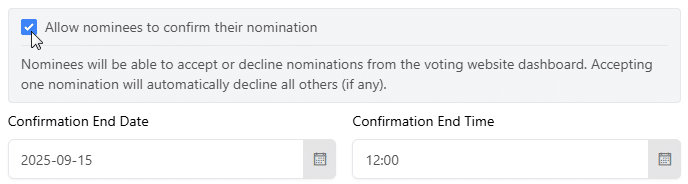
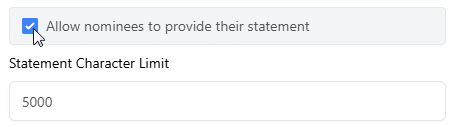
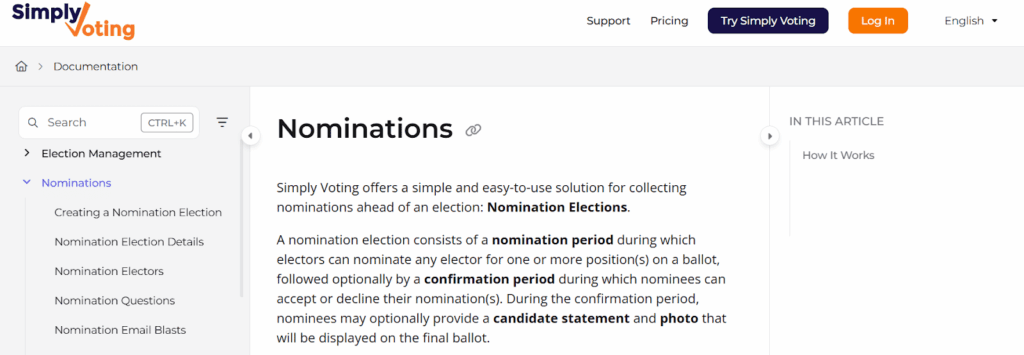
In a nomination election, electors can nominate any elector for one or more position(s) on a ballot. It can optionally include a confirmation period during which nominees can accept or decline their nomination(s) and provide a candidate statement and photo that will be incorporated into the final ballot.

Election organizers can then save time setting-up the election using the nomination results to populate the final ballot. 

How does it work?

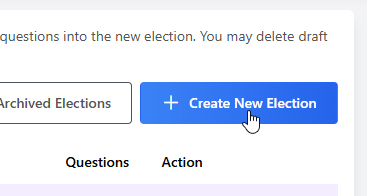
To set up a nomination election in the Election Manager tool, simply create a new election:

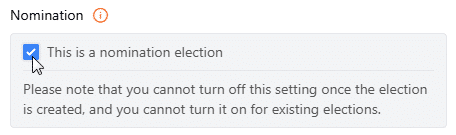
Select “Nomination” as the type, and check the box labeled “This is a nomination election.”

In the Election Manager tool, you designate a new election as a nomination event, and then determine nomination settings such as if nominees are allowed to accept or decline nominations, and if candidate photos and statements can be provided.

You will also need to upload your list of electors and indicate the positions that will be on the ballot. Like any other election, you will also schedule an email blast, proof the ballot and finalize the election

Once your electors have nominated candidates and the election is finished, all nominees will be listed on the nomination results page. If applicable, you will then allow nominees to confirm their nomination and add their statement and photo.

Once you are done processing nominations (and once the confirmation period is finished, if applicable), you will need to “click” on “populate” to create the election ballot.

For more information about managing a nomination election, see https://help.simplyvoting.com/docs/en/nominations

This new feature allows you to run your nomination process and election on the same platform while facilitating your nomination process and simplifying your ballot setup. 

Log in to your Election Manager now to start setting up your next nomination election. 

Case Study: University of Minnesota

The University of Minnesota is one of the largest universities in the United States with over 52,000 students, organized into multiple colleges and schools. Since adopting Simply Voting since 2013, and over 500 voting events have been run. 

The University of Minnesota’s Requirements & Challenges

They are running governance elections, resolution and ratification votes as well as surveys. A mix of student leaders and university staff are managing the voting events.

  • System Needs:
    • A universal access with standardization and an audit history
    • A visual aesthetic consistent with the university branding 
    • An efficient handling of the numerous events simultaneously

The Simply Voting’s Solution

Simply Voting offers a flexible and secure online voting platform for universities. The University of Minnesota opted for: 

  • Self-Service management,  training with a train-the trainer approach and continuous availability for advanced support
  • Voter Authentication integrated with campus single sign-on. This way, voters can access ballots using familiar university credentials
  • Voter Segmentation to categorize voters to present unique, custom ballots for different voter groups

The results

Today, the university staff and students praise the system’s ease of use and reliability. Simply Voting has become the University’s trusted voting platform for running transparent and efficient elections

Looking for an online voting platform to run your university election?

Feel free to reach out to us. We will be happy to provide a solution tailored to meet your requirements.